

This is an unexpected experience; more intelligent and emotionally connected than anticipated. A musical with a play or a play with music? Does it matter? Come for the music. Stay for the theatre.
Kate Stratford
5 Stars
Venue: Lyric Theatre
Sydney
Dates: Until February 2027
A bio-juke-box musical is usually a predictable thing. There are no musical surprises. We know the artist’s life before we take our seats in the auditorium. This is to be a tribute with familiar music. Buy a copy of the recording at the merch bar in the foyer.
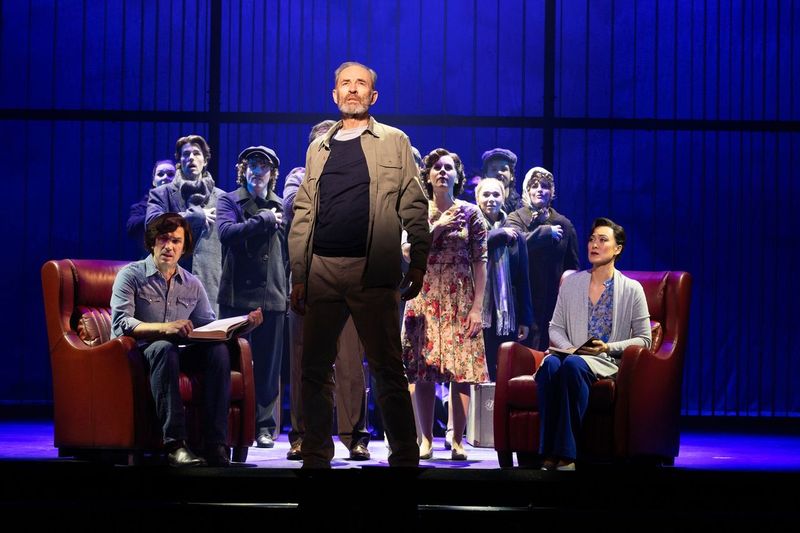
But A Beautiful Noise: The Neil Diamond Story attempts something different. This is not a rags to riches story. The money made is almost incidental. This is a story about a man coming to terms with his inner life and own mortality – the dramatic arc of a stage-play. In this way, A Beautiful Noise offers something more sophisticated, more considered. It opens with a theatrical device rather than a musical one. On a minimalist set, a sour, dour old Neil Diamond (Terence Crawford) is complaining to his therapist that his wife and kids have insisted he go to therapy because he has become too difficult to live with. Framing the action thus, the musical becomes a Socratean exploration of the proposition that an unexamined life is not worth living.
Neil Diamond himself signed off on the libretto by Antony McCarten. As the premise for the musical, it is, at first, unsettling for the audience whose expectations were a lot less serious. They came to sing-along to Sweet Caroline, instead they are being asked to consider that a human life spent going through the motions lacks real meaning, depth, and authenticity. One must ask ‘Who Am I?”. And finally, in a confrontation duet between old and young Neil, he concludes “I Am … I Said” in the introspective ballad about identity, loneliness, and feeling unmoored despite career success. It works. The initial uncertainty about what we are watching gives way to the sort of attentive stillness one usually finds in drama. The musical numbers take on more meaning. Now we understand what is behind the lyrics and why worldwide, we connect to this man from Brooklyn with the gravelly voice.
If they are going make this formula work, they are going to need some hard-hitting talent. Thankfully, Will Swenson as the young Diamond has the admirable chutzpah to make us believe we are watching the man himself. Swenson is all showmanship and his vocals, particularly in the lower register are so precise that one can hear the whole of Hot August Night playing. The performance goes beyond mimicry – he holds the centre.
As the elderly Neil, Crawford has all the irascibility that the fear of mortality brings. This is not someone who will go quietly into the night. This Neil is going to rage against the dying of the light.
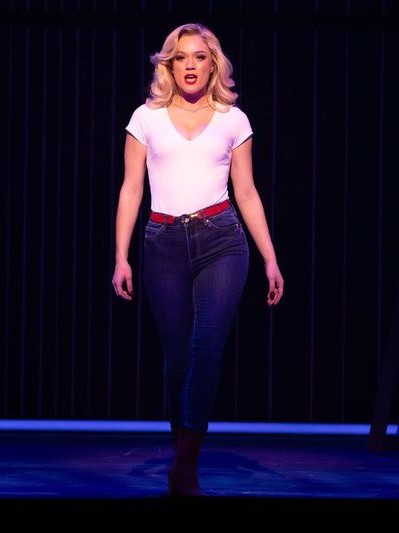
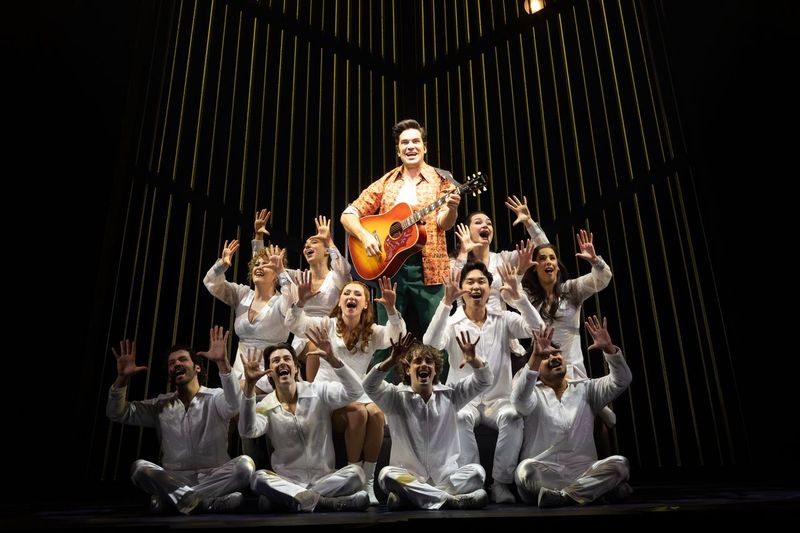
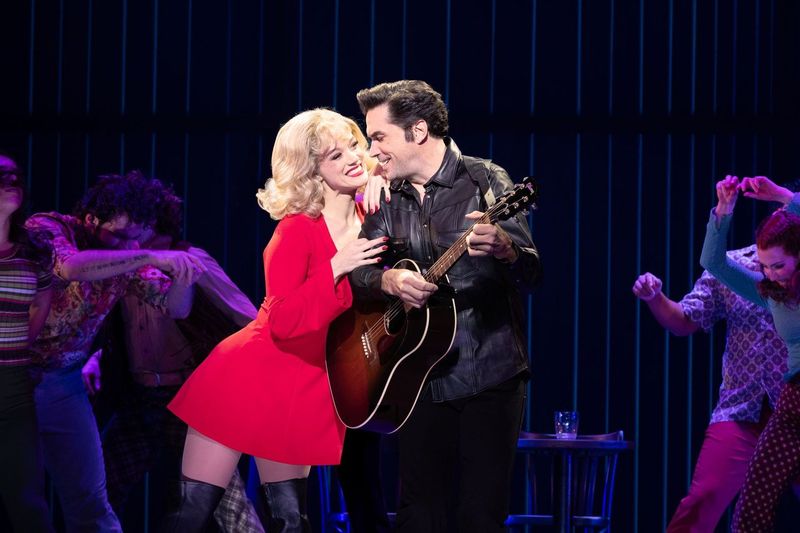
Matching Swenson’s stage presence is the immensely talented Ashleigh Rubenach as Diamond’s second wife Marcia. Forever in Blue Jeans becomes her plaintive longing to an always absent husband in a perfectly pitched song and dance. Monica Sayers brings a warm authority to the therapist role whilst the rest of the ensemble take on the many roles of people Diamond encountered in his life; swirling around him, coming and going, his touring family. The choreography (originally by Steven Hoggett) has overtones of the work of New York choreographer Dan Safer; who pioneered dance as a means of exploring the emotional landscape of libretto. Back-up dancers and singers provide the wounds through which the light enters and leaves Neil Diamond.
Michael Mayers direction follows this line of emotional landscaping. The two Neils’ inner life is mirrored in the staging. Both at times isolated and lonely; at other times adrift in a sea of swirling people. Memory becomes the present. This depth of attention to main character inner life is usually the purview of a stage-play. Here, there are several “moments”. When the despairing Neils are on the ground begging. The elderly, Parkinson’s riddled Neil confronting his younger self in “I am … I Said” (audience eyes might become a little wet here.) Observing each other through the passage of time.
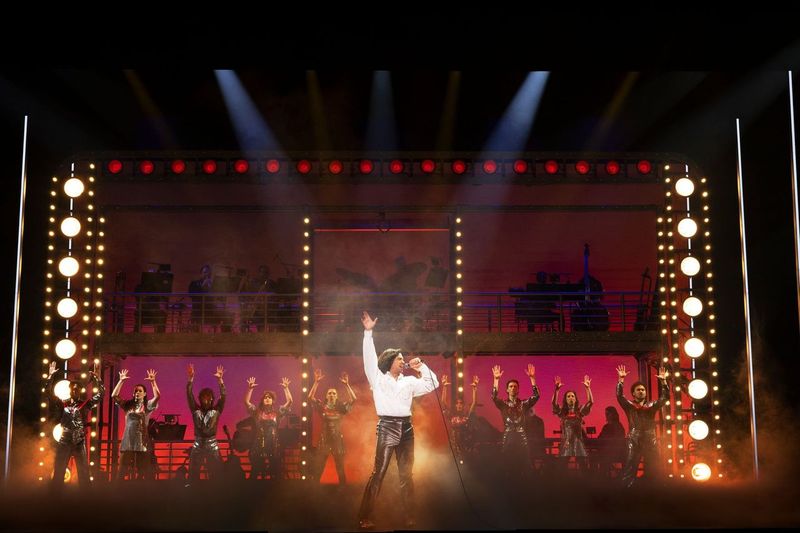
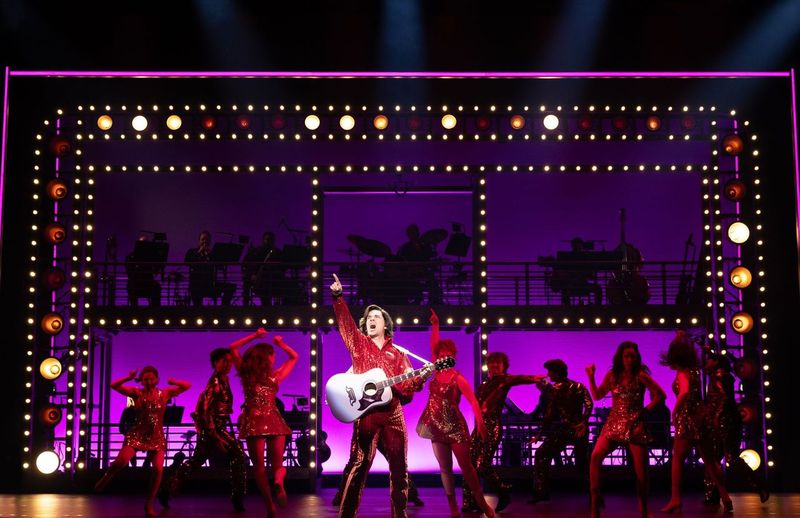
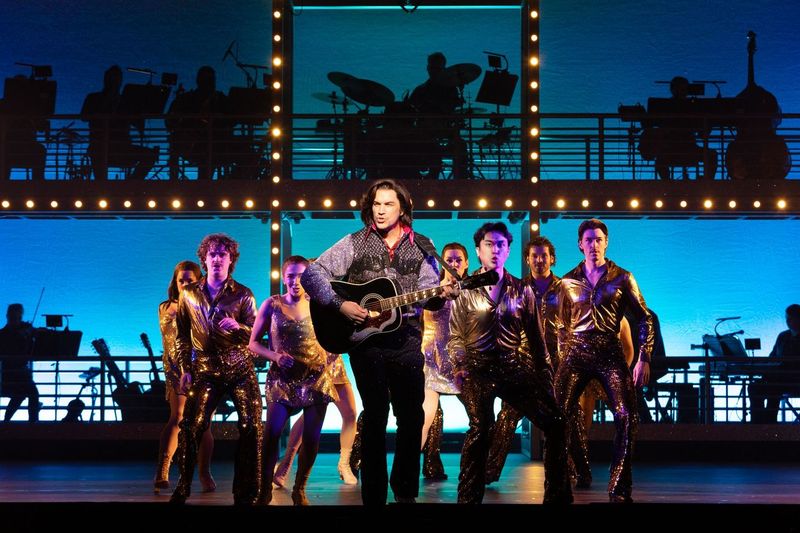
Fear not – there is balance. The audience is also treated to great musical moments. “Crunchy Granola Sweet” and “A Beautiful Noise” moments. The sequins, the hair, the sheer exuberance. The poignant “Hello Again” (which has to be the anthem for the nostalgic early hours phone call), the pain of break-up in “You Don’t Bring me Flowers” the loneliness of “Solitary Man”. Diamond has sold more than 130 million albums worldwide and has dominated the charts for more than five decades with 38 Top 40 singles and 16 Top 10 albums – what does one include and exclude in a 2 hour musical? The best-known is there, held together by the tight but exuberant musical direction of Nigel Ubrihien.
Wisely, David Rockwell’s set is minimalist (for a musical!). The story is given the space to play out without unnecessary ooh-ahh reveals. The homage to Diamond’s career longevity is in multitude of hanging lights from many decades. It is simply and cleverly creative.
This is an unexpected experience; more intelligent and emotionally connected than anticipated. A musical with a play or a play with music? Does it matter? Come for the music. Stay for the theatre.
And yes, there is still a “Sweet Caroline” sing-along. Now I am going to dig out my old vinyl copy of Hot August Night and play it.
photos by Jeff Busby.
Kate Stratford, Theatre Now